
AI Receptionist vs. Legal Answering Service for Law Firms
AI and human answering services solve different intake problems. Compare coverage, empathy, consistency, cost structure, and escalation before choosing.
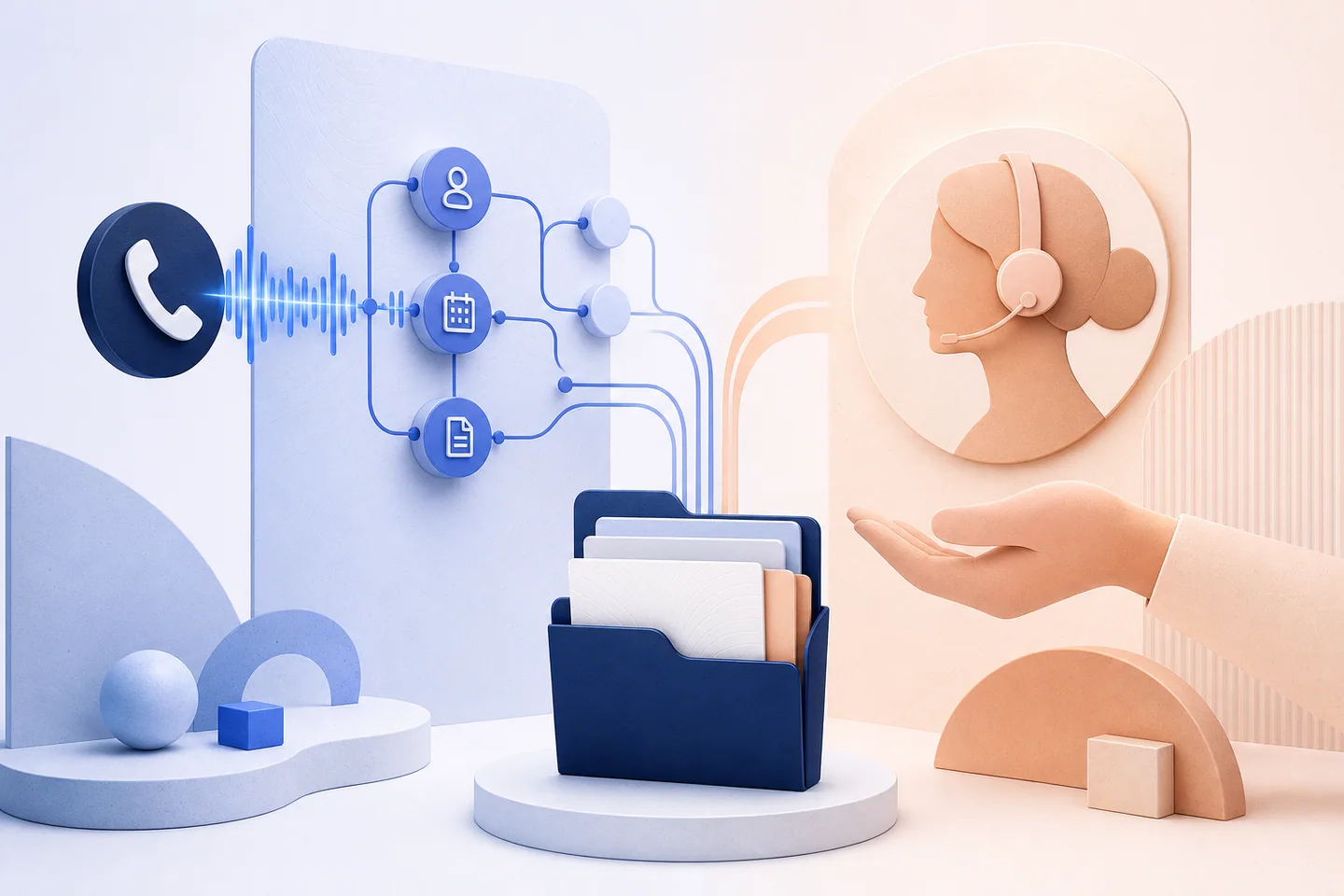
The decision is not simply AI or human
A legal answering service and an AI receptionist can both keep calls away from voicemail, but they have different strengths. Human receptionists are better at empathy, ambiguity, and emotionally difficult conversations. A carefully limited AI receptionist is better at immediate availability, repeating an approved workflow consistently, and turning routine answers into structured data.
Many firms should use a hybrid: people during the highest-value or most sensitive conversations, with automated coverage for overflow, after-hours calls, scheduling, and structured intake.
Where a human service is stronger
Human receptionists can notice hesitation, adapt to an unusual story, and respond naturally when a caller is distressed. They can also recover from a confusing conversation without forcing the caller back into a predefined flow.
A human-first option deserves serious consideration when most callers are in crisis, the intake process depends on judgment, or the firm is not prepared to review and improve an automated workflow.
Where an AI receptionist is stronger
A voice assistant can answer at the same time every day, follow the same approved questions, send summaries immediately, and cover several calls without putting each caller into a queue. It can also integrate scheduling and intake fields into a repeatable process.
Those strengths matter only when the system has reliable handoffs. An assistant that cannot recognize uncertainty or reach a person is not complete intake coverage.
Compare the complete cost
Do not compare only the advertised monthly price. Ask about included minutes, overages, setup, custom scripting, multilingual coverage, call transfers, recordings, integrations, and staff time spent correcting notes.
The cheapest service is not necessarily the lowest-cost workflow. A low monthly fee can still be expensive if employees must listen to every recording and re-enter every field. Likewise, a premium human service may be worthwhile when one well-handled call can become a valuable case.
A practical scorecard
Score each option against the calls your firm actually receives:
- New prospect versus existing-client calls.
- Business-hours overflow versus overnight coverage.
- Routine scheduling versus distressed callers.
- One language versus multilingual intake.
- Message taking versus structured qualification.
- Email summaries versus direct case-management integration.
- Voicemail fallback versus immediate human escalation.
Test before replacing anything
Run the same ten scenarios through each service. Include a straightforward prospect, a caller who changes languages, a noisy connection, an existing client, a wrong number, an urgent phrase, and a caller who asks for legal advice.
Review accuracy, tone, disclosure, escalation, and the work required after the call. The best system is the one your staff can trust on an ordinary busy day—not the one with the most polished demo.
Sources and further reading
Source: Clio, law firm AI integrations — https://www.clio.com/resources/ai-for-lawyers/law-firm-ai-integrations/
Source: Answering Legal, immigration attorney answering service — https://www.answeringlegal.com/who-we-serve/immigration-attorney-answering-service
Common questions
Frequently asked questions
Is an AI receptionist cheaper than a legal answering service?
It can be, but advertised monthly prices do not show the complete cost. Compare included minutes, overages, setup, multilingual coverage, transfers, integrations, and the staff time required to correct notes or re-enter intake data. The lowest-cost option is the workflow that produces a reliable next action.
When is a human legal answering service the better choice?
A human service is usually stronger when callers are distressed, stories are ambiguous, or intake depends on judgment and empathy. Firms should favor a human-first path for high-stakes conversations unless an automated system can recognize uncertainty and transfer the caller immediately to an appropriate person.
Can a law firm use both AI and human receptionists?
Yes. A hybrid model can keep people on sensitive or high-value conversations while using an AI receptionist for overflow, after-hours coverage, routine scheduling, and structured intake. The handoff rules matter more than the label: every uncertain or urgent call needs a clear route to a person.